


Habe ich Frizz oder Spliss?

Kurz erklärt
Frizz beschreibt einen unruhigen, abstehenden Haareindruck. Spliss meint gespaltene Haarenden. Beides kann gleichzeitig vorkommen, ist aber nicht dasselbe. Ein glättendes Pflegeprodukt kann das Erscheinungsbild verbessern, ohne gespaltene Spitzen dauerhaft zusammenzufügen.

Erklärt eigene natürliche Struktur und zeigt Öl statt täglich zu glätten.
Chrissy erklärt im Video
Das nimmst Du mit
- Natürliche Struktur erkennen
- Die Spitzen genauer ansehen
- Pflege nach dem Ziel wählen
Schau Dir das Beispiel an und lies darunter, worauf es bei Deiner Ausgangslage ankommt.
Almost everyone of us is familiar with them: frizz and split ends – the two archenemies of healthy hair. Neither is actually a freak of nature, but rather a kind of genetic fingerprint of our organism, signaling to us that something in our care, health, or lifestyle needs improvement. In this context, it's important to take action early on to prevent frizz and split ends from happening. Here's how to tell if your hair is affected by split ends or frizz, what the differences are, and how to combat the problem long-term.
What do split ends and frizz mean?
Split ends is simply the generic term for split ends. Therefore, in professional circles, they are often referred to as "split ends." Split ends actually always appear first in the lengths of the hair and affect the tips, but can spread all the way up to the roots if not treated in time.
Frizz refers to unruly hair that curls in all directions, which also explains the translation “frizzy” of the word frizz.
Are split ends and frizz the same thing?
Even though both names are very similar and one often hears one of the two terms as a general term for damaged hair, split ends and frizz are actually completely different.
While split ends could indeed be described as "damaged" hair because the ends or even the entire hair split, frizz is commonly used to describe hair that is unruly and difficult to manage. Frizz is when the hair curls in all directions, sticks out from the head, and is difficult or impossible to style. However, this is not necessarily a sign of damaged hair structures that have already split.
What both have in common, however, is that they definitely only occur when our hair is lacking something and is dry, dull, brittle, and over-processed. This means that both split ends and frizz should be considered warning signs that prompt you to take active steps to improve your hair's health.
What types of split ends are there?
Split ends can take various forms. For example, there are small knots along the length of the hair, which are particularly common in curly hair. Pulling or rubbing the knots too vigorously promotes hair breakage, so be careful when untangle- ing the knots. Split ends also look like a candle, with the wick becoming finer and weaker towards the end, like the tips of our hair. This is always an indication that your hair's inner structure has already been affected and that there is more damage than just on the outer cuticle. Trident-shaped split ends make your hair look as if it has three ends! This type of split end should alert you to the need to see a hairdresser immediately . The same applies to a Christmas tree, as this signals that your hair is split in all directions, so you should remove the split ends as quickly as possible before they spread to other parts of your hair. If the split ends are in the form of a divining rod, the ends split in two directions and show you that your hair needs moisture.
How do split ends and frizz occur?
To successfully combat split ends and frizz, you first need to understand how they occur. Many factors can stress and even damage your hair. However, the most common are...
- Intense heat and unprotected UV radiation
- Intensive and frequent hair washing, which removes moisture from the hair
- Aggressive styling such as strong blow-drying, straightening irons, curling irons, hairspray, etc.
- Chemical treatments such as dyeing, toning or perming
- Inadequate or incorrect care products (e.g. no shampoo for colored hair, missing hair treatments, products containing parabens and silicones)
- Headwear such as hats, which rubs the hair and causes frizz
- Stress and malnutrition
- Hair ties with metal insert
By the way: Frizz usually occurs during significant temperature changes, such as in winter, when it's very cold outside and your hair is exposed to the dry, heated air inside. Frizz also occurs when our outer cuticle is so rough that the hair dries out and struggles to absorb the missing moisture from the surrounding air. However, when this humidity penetrates beneath the cuticle, the hair naturally curls, thus causing frizz.
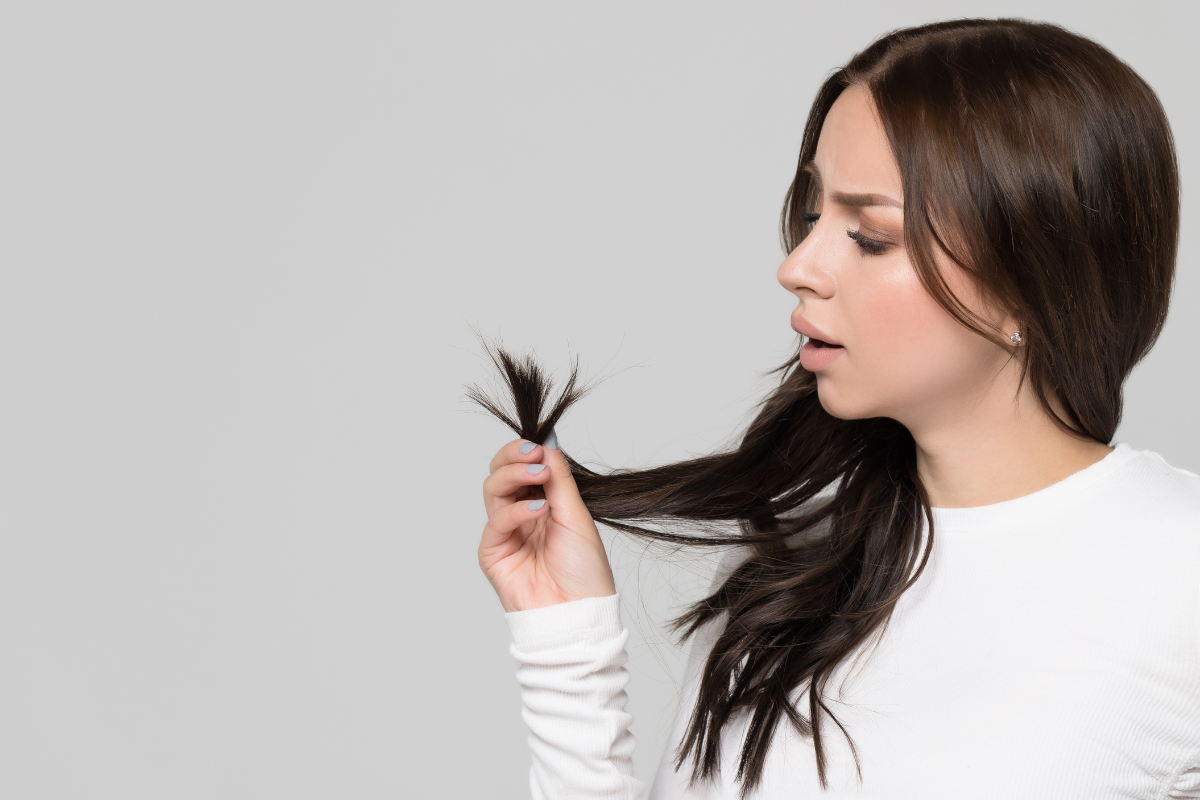
You should also know that split ends always start at the tips, because they're especially susceptible to dryness. After all, they have a low capacity for moisture absorption, which makes them so sensitive.
Combat split ends and frizz
Split ends or unruly hair are no reason to despair. Quite the opposite: there are many ways to restore shine and health to your hair. We'll tell you how!
1. Intensive care
When frizz occurs, you should immediately try to counteract it with high-quality care products. Use hair masks, conditioners, and suitable repair products to restore moisture and make your hair more manageable. But be careful, these products can't work miracles! You'll only see the first results after several uses.
2. Split ends cut
If split ends have affected your hair, you need to act quickly. The sooner you address them, the less chance they have of spreading from the lengths to the roots. Always remember, hair that's too damaged can't be repaired. For this, consult a trusted hairdresser. They will only remove what is beyond repair, without having to worry about a complete short cut. Split-end trimming is used in various ways:
- Twist Cut
- the hairdresser twists a strand of hair up to the base of the head and cuts out only the protruding strands, i.e. the split ends, with the hairdressing scissors
- Depending on the customer's wishes, the very bottom part of the tips is usually trimmed to allow your hair to grow back healthily
- Care Cut
- the hairdresser first heats the scissors to about 140 degrees
- then the tips are cut, whereby the heat of the scissors automatically seals the tips after the split ends have been removed
- Hair Dusting
- the hairdresser first straightens the hair
- now it is pulled tight strand by strand so that the split ends are clearly visible
- the hairdresser now cuts these protruding ends
3. Home remedies
Of course, there are also some home remedies that have proven effective against split ends. For example, you could massage oil into your split ends, let it work, and then slowly rinse it out. These are supposed to soothe the split ends.
Tip: Please only use high-quality oils such as pure olive oil, coconut or jojoba oil.
A combination of egg and honey could also help combat split ends. Here's how:
- Mix 1 teaspoon of honey with one egg and 2 tablespoons of olive oil
- Carefully distribute this pack on your hair, especially on the split ends
- Leave the pack on for about 30 minutes and then rinse thoroughly with cool water
- Wash your hair again with shampoo and rinse it again
Important: Contrary to some claims, split ends cannot be repaired! Once split ends are present, they are here to stay and can only disappear if they are removed. Any measures intended to "treat" split ends are only superficial. This is more about improving appearance than a deep regenerative method.
And when nothing else helps…
Unfortunately, there are also cases where no treatment or split-end trimming is successful. If your hair has been damaged too severely by split ends, you should, for better or for worse, leave some length and have the excessively split hairs cut off. Otherwise, you risk permanent and serious damage to your hair.
4. Split end trimmer and candle cuts
There are two other methods for combating split ends. The split-end trimmer, which is suitable for home use, uses a device that "cuts out" the split ends. The candle cut, on the other hand, involves burning the split ends out of your hair with a lit candle. We strongly advise against both methods! First, they belong in the hands of a professional, and second, you should really consider whether another method might be more suitable for you to get rid of split ends.
How to prevent split ends and frizz
Prevention is much better than fighting split ends or frizz. We'll tell you how you can successfully protect yourself from these hair problems.
- Intensive hair care
Make sure you use high-quality care products that are tailored specifically to your hair type and free of artificial ingredients. Condition your hair regularly, use hair treatments, conditioners, and masks. Never wash your hair with too much heat or too much cold, and avoid rubbing it dry vigorously afterward. This increases your risk of breakage. Anti-frizz shampoos and anti-frizz hairsprays, which help hold your hair in place, are also good for combating frizz.
- No styling
Give your hair a break as often as possible. Let it air dry instead of blow-drying, wear it loose, don't tie it tightly or even gel it, avoid hairspray and straightening irons, and only brush with a soft brush made with natural bristles. For frizz, it's also advisable to use a comb with wide teeth.
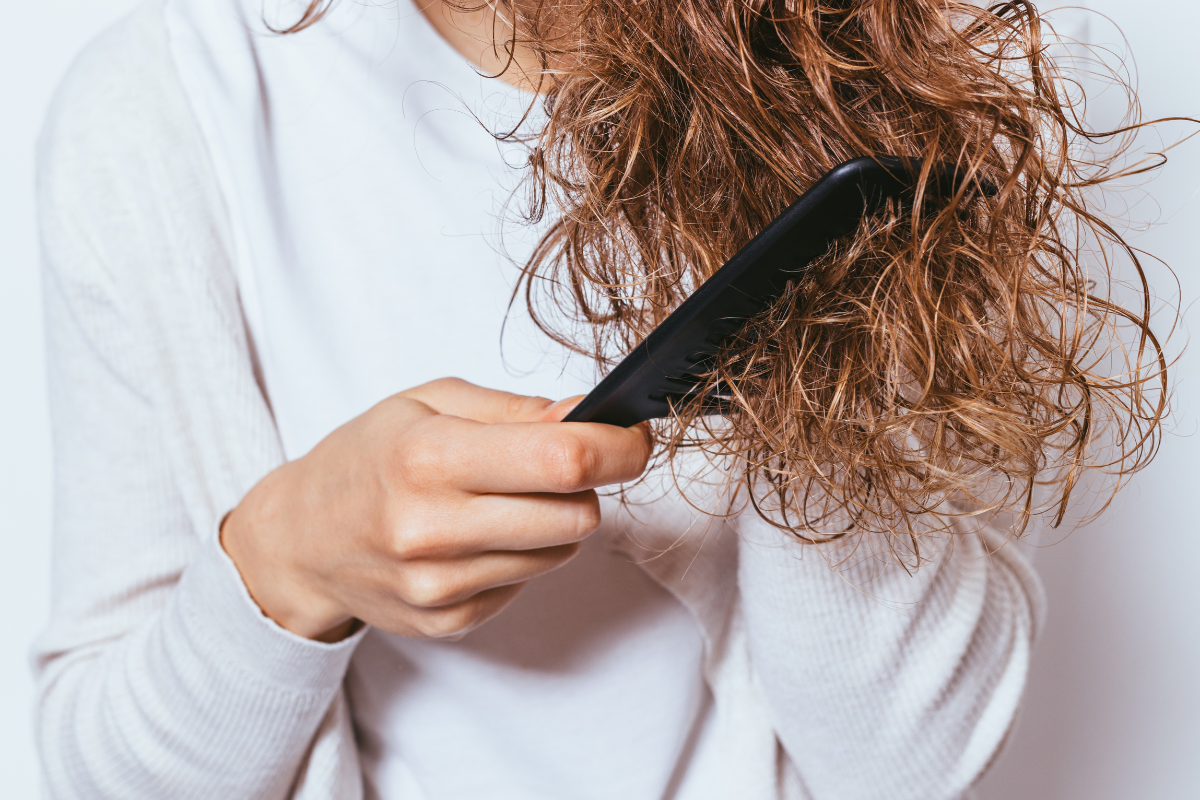
Tip: If your hair is frizzy, use a Tangle Teezer to comb it.
- Regularly trim the tips
Go to the hairdresser regularly (about every 4-6 weeks) and have your ends trimmed to prevent split ends from occurring in the first place.
- No head coverings
Unless absolutely necessary, you should not wear headgear to prevent frizz and avoid unnecessary friction on your hair.
- The right pillow materials
If you are prone to split ends and frizz, you should use silk pillows as a sleeping surface; they avoid excessive friction and thus also splitting of your hair.

- Healthy eating
Make sure your body gets enough vitamins and nutrients to strengthen your hair from within.
Tip: Always use a heat protection spray on your hair! You're sure to find this and many other hair care products here.
Conclusion
Overall, frizz and especially split ends are problems that can affect any hair type. However, you can protect your hair sustainably through intensive hair care with gentle products, a healthy diet, and avoiding aggressive styling, hot blow-drying, and strong coloring. Also, keep in mind that you should visit your hairdresser regularly to have split ends removed immediately. Then nothing will stand in the way of your smooth hair texture!

Verbindet sichtbare Schäden mit Warnung vor billigen Spülungen.

Reibung beim Bürsten/Schlafen als Belastung; Rich-Repair-Spray empfohlen.
